In Bangladesh Solar Panel price starts from BDT 1,000 and may go up to BDT 50,000 based on brand and features. Buy latest Solar Panel at best price from popular online shops in Bangladesh.
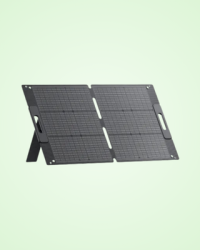
BLUETTI PV100 100W Portable Solar Panel একটি শক্তিশালী
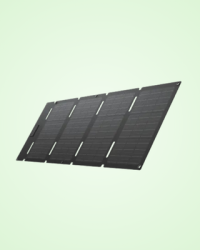
EcoFlow 60W Portable Solar Panel একটি হালকা, ভাঁজযোগ্য
Every summer, the same story repeats. The heat rises, demand spikes, and Bangladesh braces for hours of load shedding - fans stop, fridges warm up, children study by candlelight. In 2026, officials have already forecast up to 2,000 MW of shortfall during peak summer hours.
But here's what's changed: solar panels are no longer expensive, complicated, or just for the rich. Today, a quality panel costs as little as Tk 6,500, Bangladesh gets over 300 sunny days a year, and thousands of families across Dhaka, Chittagong, Sylhet, and rural areas are quietly cutting their electricity bills - sometimes by half.
|
Summer 2026 Alert: Power authorities forecast 2–3 hours of daily load shedding this season due to gas supply shortages. Solar + battery storage is the most reliable way to protect your home or business right now. |
A solar panel is made of dozens of small solar cells - usually silicon-based - that absorb sunlight and convert it directly into electricity. When sunlight hits the cell, it knocks electrons loose, creating a flow of direct current (DC). This DC power flows into an inverter, which converts it to alternating current (AC) - the type your fans, TVs, fridges, and lights use.
Any excess electricity charges a battery bank for use at night or during cloudy weather. In a grid-tied system (common in urban areas), surplus power can feed back into the DESCO/BREB grid and reduce your bill even further.
The beauty of solar is its simplicity. No fuel. No moving parts. Minimal maintenance. Just sunlight - and Bangladesh has plenty of it.
|
Geographic advantage: Bangladesh lies between 20°N–26°N latitude - the global solar belt. Average solar irradiance is 4–5 kWh per square metre per day, making it one of South Asia’s best countries for solar energy. |
Not all panels are built the same. Here is a plain-language breakdown of the main types of solar panel you will find in Bangladesh - and which situation each suits best.
|
Type |
Efficiency |
Best for |
Price level |
|---|---|---|---|
|
Monocrystalline |
18–22% |
Most homes, humid/shaded areas |
Mid-range (recommended) |
|
Polycrystalline |
15–17% |
Open rural rooftops, tight budgets |
Budget option |
|
Bifacial (TOPCon) |
20–24% |
Commercial, large rooftops, factories |
Premium (best ROI at scale) |
|
Flexible / Portable |
12–15% |
Travel, boats, remote areas |
Varies (niche use) |
Solar panel prices in Bangladesh range from Tk 6,500 to Tk 33,000+ depending on capacity and brand. On a per-watt basis, expect to pay Tk 20 to Tk 40 per watt for quality panels. Use the table below to match your budget with the right size.
|
Capacity |
Best for |
Price range (BDT) |
Recommended type |
|---|---|---|---|
|
50W – 100W |
Lights, fans, phone & laptop charging |
Tk 4,000 – 8,000 |
Mono or Poly |
|
150W – 250W |
Small household loads, IPS top-up |
Tk 8,000 – 14,000 |
Monocrystalline |
|
300W – 400W |
Full home: fridge, fans, lights, TV |
Tk 14,000 – 22,000 |
Mono PERC |
|
500W – 550W |
Home + AC, small offices, shops |
Tk 22,000 – 30,000 |
Mono PERC / Bifacial |
|
625W+ |
Commercial, factories, large rooftops |
Tk 30,000 – 33,000+ |
Bifacial TOPCon |
We stock panels from trusted brands with proven track records in Bangladesh's climate. Here is a quick overview of the top names you will find in our catalogue.
JinkoSolar
World's number one solar brand by global shipment. The Tiger Neo N-Type TOPCon technology offers best-in-class efficiency and excellent heat tolerance. Ideal for commercial rooftops and large residential systems. IDCOL-compatible and IEC certified.
Longi Solar
China's leading monocrystalline panel maker. The Hi-MO series delivers outstanding efficiency at competitive prices. Very popular for mid-to-large home systems across Bangladesh's urban centres.
Rahimafrooz
Bangladesh's own 25+ year solar veteran. IDCOL and BUET approved. Trusted by millions of rural households and NGO projects. Excellent local support and spare parts availability across all districts.
Canadian Solar
Premium international brand with global certifications. The BiHiKu series is a top choice for high-output residential and commercial arrays with excellent long-term performance warranties.
Trina Solar
Consistent quality at competitive prices. The Vertex series reaches 600W+ with excellent heat tolerance - well-suited to Bangladesh's hot summers and high ambient temperatures.
IFADA Solar
Bangladesh-based, IDCOL-approved panels starting from 20W. Budget-friendly and widely available. A strong choice for rural electrification and small off-grid systems across the country.
Step 1: Calculate your energy load
List every appliance you want to power - fans, lights, fridge, TV, AC - and add up their wattage. Multiply by daily hours of use to get your total daily watt-hour (Wh) requirement. This number drives every other decision in your system. Our team can do this calculation for you for free.
Step 2: Choose your system type
Off-grid: Panel + battery + inverter. Fully independent from the DESCO/BREB grid. Best for areas with frequent or long outages. Grid-tied: Panel + inverter, no battery. Lower cost, uses grid as backup, ideal for net metering. Hybrid: Both - the preferred choice for urban homes that want backup power and lower bills simultaneously.
Step 3: Select the right panel
Based on your calculated load, choose panel capacity. For most Bangladeshi families, a 300W–400W monocrystalline panel is the sweet spot. For shops and offices, 500W–625W bifacial panels offer better return on investment at scale.
Step 4: Add a charge controller and inverter
A PWM or MPPT charge controller regulates charging and protects your battery from overcharge. An inverter converts DC electricity to usable AC. Always match the inverter capacity to your peak load in watts. MPPT controllers are recommended for systems with monocrystalline panels.
Step 5: Size your battery bank
For a typical Bangladeshi home wanting 8 hours of backup: multiply daily Wh need by backup hours and divide by battery voltage. Lithium (LiFePO4) batteries last longer and perform better in heat than traditional lead-acid batteries - a worthwhile upgrade if budget allows.
Step 6: Install and connect
A professional installer mounts the panels on your rooftop, wires the complete system, and connects everything safely. For most homes, the full installation takes 4-8 hours. Ask for IDCOL-certified installation if you plan to apply for government subsidies or net metering approval.
|
Common Myth |
The Reality |
|---|---|
|
"Solar doesn't work during monsoon or cloudy weather." |
Panels generate 10–25% output even on overcast days. A properly sized battery covers the gap. Many BD homes run successfully through the full monsoon season. |
|
"Solar panels are too expensive for regular families." |
A complete basic system starts from under Tk 50,000. IDCOL financing allows monthly installments, making solar accessible to most income groups. |
|
"Solar only makes sense outside Dhaka in rural areas." |
Flat concrete rooftops in Dhaka, Chittagong and Sylhet are ideal solar mounting surfaces. Urban installations often have the highest ROI due to higher electricity bills. |
1. How much does a solar system cost for a home?
A basic home system (fans, lights, TV, fridge) costs around ৳50,000 to ৳150,000, including panels, battery, inverter, and installation. Installment options are available through IDCOL.
2. Which panel is best for a Dhaka apartment rooftop?
300W-400W monocrystalline panels are ideal. They perform well in heat and limited space. Brands like Longi and JinkoSolar are commonly recommended. Usually, 2-4 panels are enough for typical household needs.
3. Do I need permission to install solar in Bangladesh?
For systems under 10kW, no special permission is needed. For net metering, approval is required from DESCO, DPDC, or BREB. IDCOL financing requires a certified installer.
4. Which solar brands are best for Bangladesh?
Top international brands: JinkoSolar, Longi, Canadian Solar. Reliable local brands: Rahimafrooz, IFADA. All perform well in Bangladesh’s hot and humid climate.
5. How long does installation take? Is support available?
Home systems are installed in 4-8 hours (1 day). Commercial setups take 2-3 days. After-sales support includes maintenance guidance and troubleshooting. Panels come with 10-12 years product warranty and 25-year performance warranty.